Bubble-Craps.com Beginner Baseline
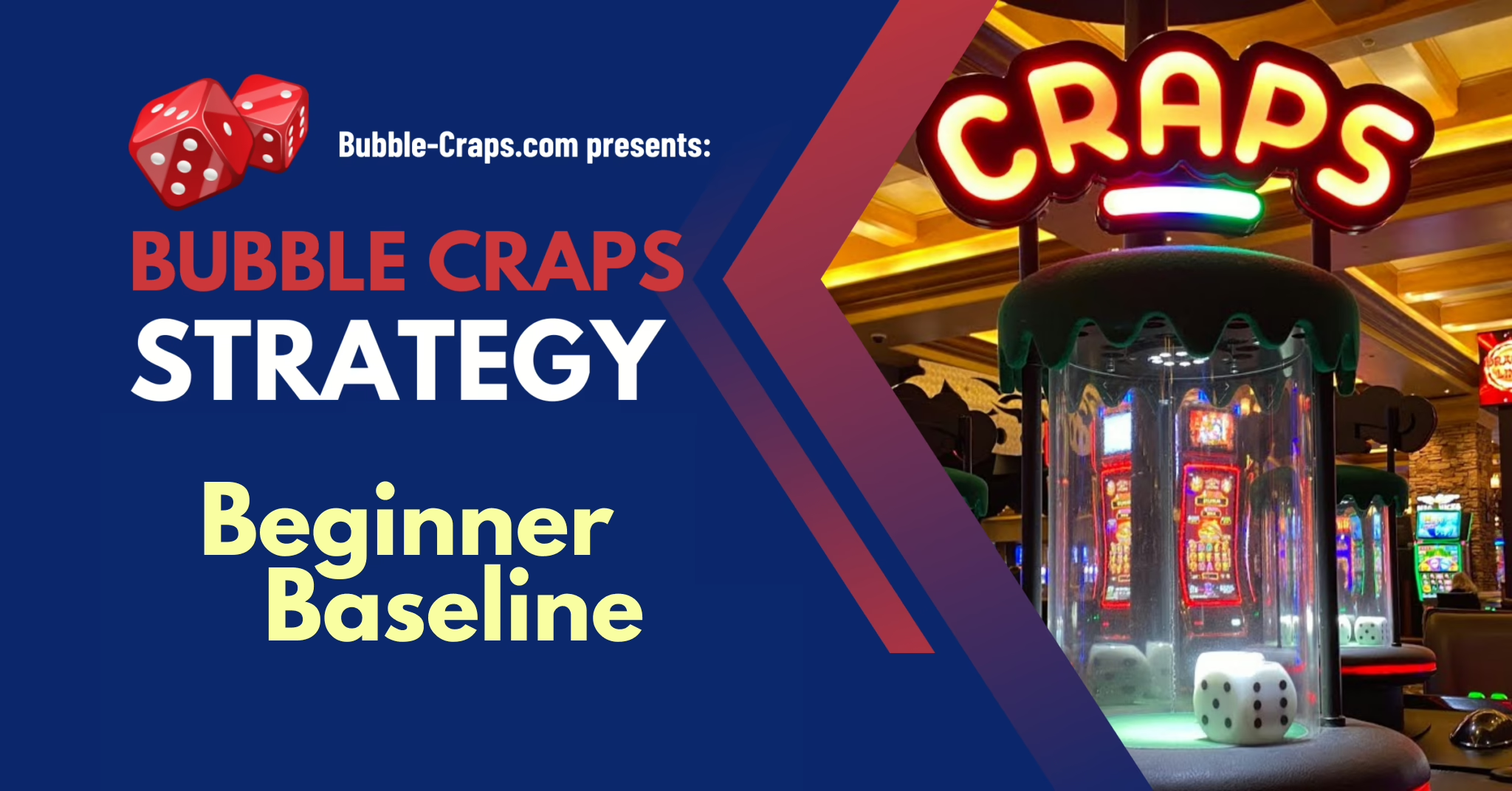
Bubble-Craps.com Beginner Baseline
The Bubble-Craps.com Beginner Baseline is an original strategy built for players who want a simple, realistic way to learn bubble craps without covering the whole screen. It starts with the Pass Line, adds small Odds after a point is established, and then uses controlled Place bets on 6 and 8 for steady action.
This is not a system that beats the game or changes the odds. The goal is structure. The Beginner Baseline gives new players a clean plan for what to bet, when to add action, when to collect, and when to reset. It is designed for bubble craps because the machine clearly shows the point, available Odds, and Place bet areas.
How This Strategy Works
The strategy starts with a small Pass Line bet before the come-out roll. If the come-out roll wins or loses immediately, you simply reset. If a point is established, you add a small Odds bet behind the Pass Line.
After the point is active, you add Place bets on 6 and 8, but only when they are not already the point. For example, if the point is 5, you can place both 6 and 8. If the point is 6, you only place 8. If the point is 8, you only place 6. This keeps the strategy from doubling up too much on the same number.
From there, the rule is simple: collect the first Place bet hit, do not press early, and reset when the point resolves or a 7-out appears. The point is not to chase every roll. The point is to learn the basic rhythm of bubble craps with a manageable amount of money exposed.
When To Use It
Use the Beginner Baseline when you are learning bubble craps, playing with a modest bankroll, or trying to avoid random prop bets and impulse betting. It works best when the machine minimums allow a small Pass Line bet, small Odds, and reasonable Place bets on 6 and 8. Avoid it if the machine minimum is too high for your bankroll or if adding 6 and 8 would make one 7-out too expensive.
Step-by-Step Strategy
Start with a small Pass Line bet
Place the minimum or a comfortable Pass Line bet before the come-out roll. This keeps the strategy tied to the normal craps point cycle.
Resolve the come-out roll
If 7 or 11 rolls, the Pass Line wins. If 2, 3, or 12 rolls, the Pass Line loses. If 4, 5, 6, 8, 9, or 10 rolls, that number becomes the point.
Add small Odds after a point is established
Once the point is active, add a small Odds bet behind the Pass Line if your bankroll allows it. A beginner version uses 1x Odds or less if the machine allows smaller amounts.
Place 6 and 8, but avoid doubling the point
If the point is not 6 or 8, place both 6 and 8. If the point is 6, place only 8. If the point is 8, place only 6.
Collect the first Place bet hit
If 6 or 8 hits, collect the win. Do not press on the first hit. The first win is there to reduce pressure and build discipline.
Press only with profit
After at least one collected Place bet win, you may make one small press if you want more action. If you are not ahead, keep collecting.
Reset when the point resolves
If the point repeats, collect the Pass Line and Odds result, then clear or reset your Place bets for the next come-out cycle.
Stop chasing after a 7-out
If a 7 rolls before the point repeats, the Pass Line, Odds, and active Place bets lose. Restart at the base bet instead of increasing the next round.
Example Session
Example Setup
- Starting bankroll: $100
- Starting bet: $5 Pass Line
- Odds plan: Add $5 Odds after a point is established
- Place bet plan: Place $6 on 6 and/or 8 after the point is active
- Main rule: Collect first, press only with profit
- Reset rule: Return to the base plan after each point cycle
Roll Timeline
The point is established as 5. Your Pass Line bet is now waiting for 5 to repeat before a 7.
You add a small Odds bet behind the Pass Line.
You place modest bets on both 6 and 8.
The Place 6 wins. Collect the payout and leave the original 6 working.
Nothing resolves. The Pass Line, Odds, and Place bets remain active.
The Pass Line and Odds win. Reset the layout and return to the next come-out roll.
The active bets lose. Reset to the base plan instead of chasing.
What This Example Shows
This example shows the purpose of the Beginner Baseline. You are learning the point cycle, using Odds carefully, and adding 6/8 action without turning the screen into a full-board betting mess.
Strategy Grade Breakdown
Ease of Use
Very easy to follow once the player understands the Pass Line and the point cycle.
Risk Management
Risk stays manageable because the strategy avoids prop bets and limits Place betting to 6 and 8.
Bankroll Pressure
More pressure than Pass Line alone, but much lighter than Iron Cross, Across, or aggressive pressing systems.
Profit Potential
Profit potential is solid for a beginner system, especially when the player collects before pressing.
Entertainment Value
More engaging than Pass Line alone while still staying simple and controlled.
Bubble Craps Fit
Excellent fit because bubble craps clearly displays the point, Odds options, and Place bet positions.
Pros
- Great original starter strategy for bubble craps
- Uses core craps bets instead of high-risk props
- Adds enough action to stay interesting
- Keeps the layout clean and manageable
- Teaches Pass Line, Odds, and Place 6/8 naturally
- Works well with modest bankrolls if machine minimums are reasonable
Cons
- Still loses when a 7-out appears
- Requires more bankroll than Pass Line only
- Not designed for huge payouts
- Can feel slow for aggressive players
- Machine minimums may make the full setup too expensive
Common Mistakes
- Placing 6 and 8 before a point is established
- Taking too much Odds for the bankroll
- Pressing before collecting any profit
- Adding random Field, Horn, or Hardway bets
- Keeping too much money exposed after a win
- Chasing after a 7-out instead of resetting
Final Take
The Bubble-Craps.com Beginner Baseline earns an A because it does exactly what a beginner strategy should do. It teaches the real rhythm of bubble craps, adds controlled action, and avoids the trap of covering too many numbers too soon. It does not beat the math, but it gives players a smarter structure than guessing, chasing, or loading the screen with random bets.